
What Every Emerging Screenwriter Should Know: Mentorship, Feedback, and the Path to Production
Every emerging screenwriter starts in the same place: a strong idea and a lot of uncertainty. The story feels urgent and personal, but turning that idea into a script that’s actually ready for development or production is a different skill set entirely.
What’s often overlooked early on is this: strong writing careers aren’t built in isolation. They’re built through support, repetition, and shared process.
If you’re an emerging screenwriter, your growth usually depends on three core pillars.

1. Mentorship Isn’t Optional — It’s Foundational
A mentor isn’t just someone who gives notes. A good mentor sees the version of your script you’re still circling toward.
They help you:
Spot structural problems before they become baked in
Ask the right story questions at the right time
Gain clarity when you’re too close to the work to see it clearly
Early-career writers often stall because they don’t yet know how to evaluate their own material. Mentorship accelerates that learning curve by grounding you in craft:
Story architecture
Character depth
Emotional arcs
Pacing and momentum
Just as important, a mentor helps you trust your instincts instead of second-guessing every choice. That confidence compounds over time—and often matters more than a single contest placement or isolated win.
2. Feedback Loops Keep Your Writing From Stagnating
Feedback isn’t a one-time event. It’s a cycle.
A healthy loop looks like this:
Draft
Receive specific notes
Revise with intention
Rethink the core choices
Draft again
Many emerging writers never get this full loop. Instead, they receive:
Vague notes (“raise the stakes,” “tighten dialogue”)
One-off coverage that doesn’t track growth
Feedback that pushes the script away from their voice
Consistent feedback does the opposite. It:
Slows the process down in a productive way
Identifies patterns across drafts
Helps writers make measurable progress, not lateral changes
Without feedback loops, writers often rewrite in circles. With them, each draft has a clear purpose.
3. Community Changes the Entire Journey
Writing is solitary. Development shouldn’t be.
A cohort or writing community provides:
Shared language around craft
Accountability to keep drafting
Perspective when the work feels stuck
Momentum during messy middle drafts
Writing alongside others reminds you that struggle is part of the process—not a personal failure.
Communities also tend to be where early collaborators emerge. Many projects move toward production because of a simple connection made in a workshop, cohort, or writing group.

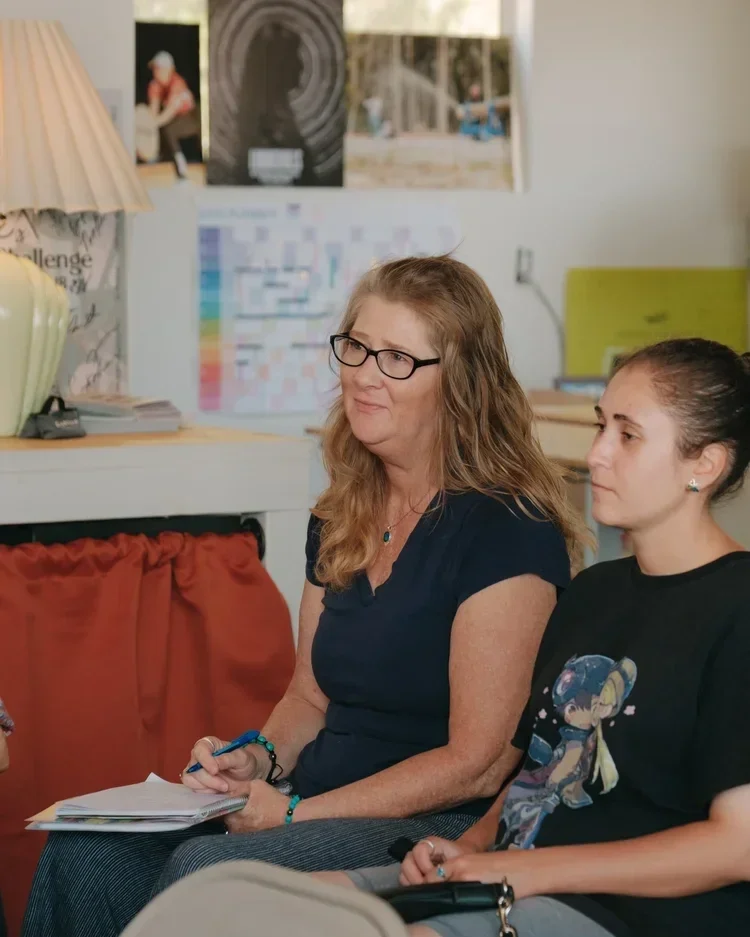
“The ISF program has validated my potential and gave me the tools and support I need to advance. Every week I felt like I was leveling up. Any questions I had found answers. It's the best support group I've ever been in.”
— Heather Alexander
Where These Three Pillars Come Together: The Indiewood Screenwriting Fund
The Indiewood Screenwriting Fund was built around a simple idea: emerging writers don’t just need money—they need development infrastructure.
Instead of focusing on competition or pay-to-play access, the fund centers on growth.
The program provides:
Mentorship tailored to emerging writers, supporting idea refinement, outlining, drafting, and revision
Structured feedback cycles that evolve with the script instead of stopping at one draft
A cohort-based community where writers move through development together rather than in isolation
The goal isn’t to rush scripts out the door. It’s to help writers:
Find their voice
Strengthen their storytelling muscles
Prepare their work for the realities of production
The result is an environment where writers aren’t competing—they’re building.
Ready to Take the Next Step?
The Indiewood Screenwriting Fund is now accepting applications for emerging writers seeking mentorship, structured feedback, and a cohort-driven community focused on real development—not just a yes or no.